Sigulda Cable Car

History

The Sigulda aerial cableway, known simply as "the cable car" (vagoniņš), opened on 3 January 1969 and is one of the few of its kind in the Baltics. Its mechanism was built in Leningrad, while the cabin itself was made at the Riga Carriage Works: more than 200 people took part in the construction, and the technical design was developed by 20 engineers.

The cable car links Sigulda with Krimulda, crossing the Gauja valley over a distance of 1,060 metres: at its highest point it rises up to 60 metres above the river, with an average height of around 43 metres. Until the 1980s, before a bus service was introduced on this route, the cable car was an important means of public transport: local residents could buy monthly passes as late as 2002.
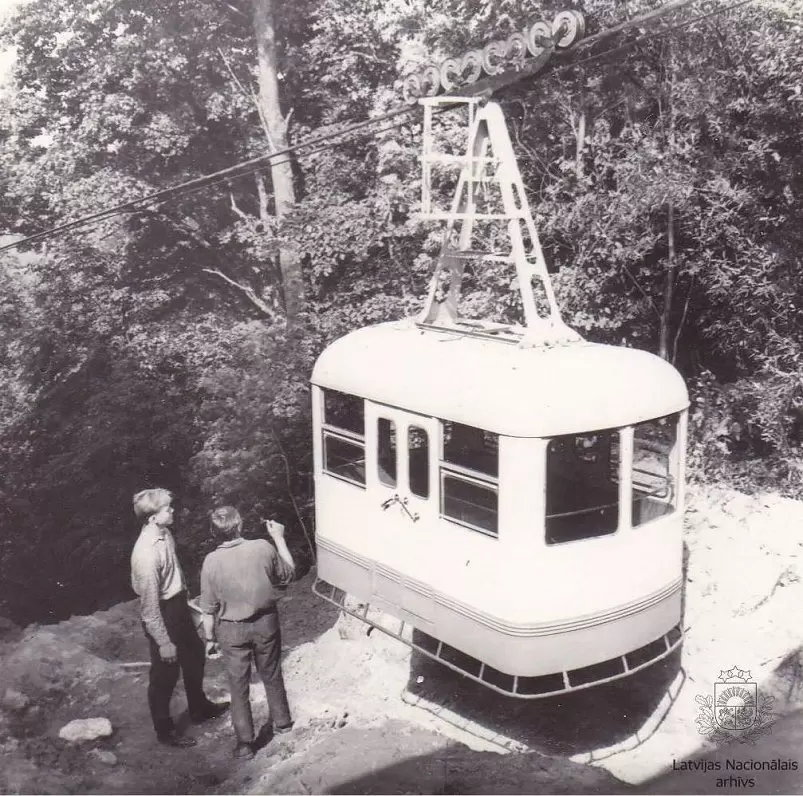
Historical photograph of the Sigulda aerial cable car

The ride today

Each cabin carries up to 22 passengers at a time, and one crossing of the valley takes about seven minutes. Since 2004 the cable car has been run by an automatic control system; before that an operator was always present in the machine room during the ride. In recent years a lift has been installed at one of the support towers so that the ride is accessible to wheelchair users as well.

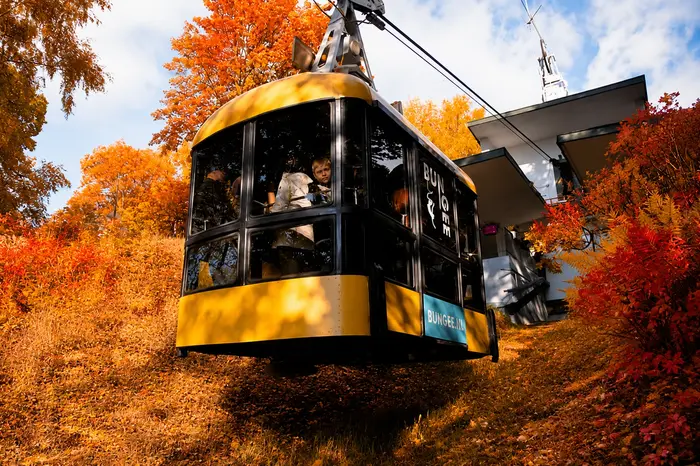
The cable car runs all year round (365 days a year), and in autumn, when the Gauja valley turns golden, the view from above has become one of Sigulda's most recognisable landscapes – the very same one captured in the Sigulda Autumn Globe souvenir.

The Sigulda cable car crossing the Gauja valley today