About Sigulda

Sigulda is one of the most beautiful towns in Latvia, and it enchants most of all in golden autumn. In autumn the picturesque Gauja valley turns into a wealth of colour. Sigulda is a place where nature, history and legends are woven into one story. Its most notable sights – Gutmanis Cave, Turaida Castle and the ruins of Sigulda Castle – let you feel both Latvia's ancient past and the majesty of the Gauja riverbanks.

"Sigulda is one of the most romantic places in Latvia. There is always a feeling there that nature is alive." —Renārs Kaupers

Gutmanis Cave

Gutmanis Cave (Gūtmaņala) is one of the most remarkable natural and cultural-historical sites in Latvia, located in Sigulda within the Gauja National Park. It is the largest cave in the Baltics and one of the oldest tourist attractions in the country.

Description:

Gutmanis Cave is a sandstone grotto that formed about 10,000 years ago after the Ice Age, when streams of water and the action of the Gauja river gradually washed out the rock. Even today the cave keeps growing thanks to an underground spring that flows out from its back. The cave is about 18.8 metres deep, 12 metres wide and up to 10 metres high, which makes it the tallest and widest cave in Latvia.

The place has been sacred and important to people since ancient times. The water of the cave's spring was once believed to be healing, and local people used it both for health and in rituals. Gutmanis Cave was also an ancient cult site where people brought offerings to the gods.

Read more >
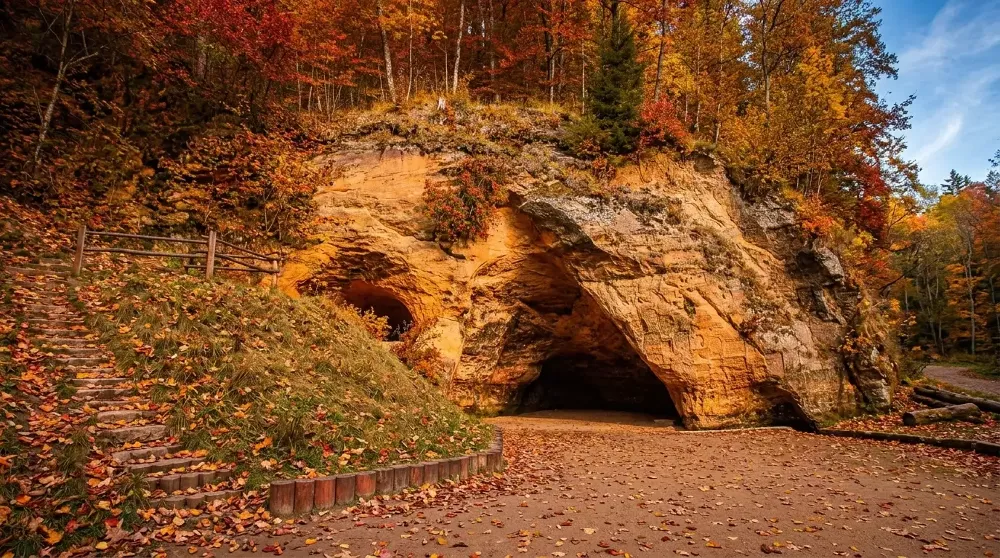
Gutmanis Cave – the largest sandstone cave in the Baltics, surrounded by golden autumn leaves

Turaida Castle

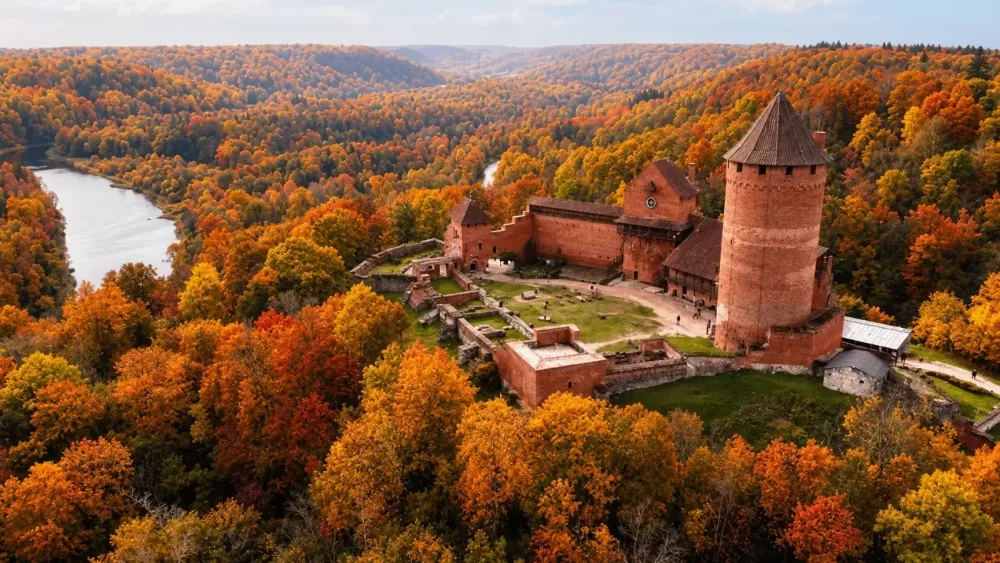
Turaida Castle was built in 1214 on the orders of Albert of Buxhoeveden, the Bishop of Riga. The castle originally served as a defensive and administrative centre to control the surrounding territory and the trade routes along the Gauja. In the Middle Ages it was an important stronghold of the Livonian Order and the Archbishopric of Riga.

The castle was destroyed several times in wars, especially during the Livonian War, but the most lasting damage came in 1776, when a great fire broke out. After that the castle was not rebuilt, and over time it turned into ruins.

The castle is closely tied to the legend of the Rose of Turaida, a symbol of loyalty and courage.

Read more >
The red-brick tower of Turaida Castle amid the autumn forests of the Gauja valley, seen from above

Gauja Bridge

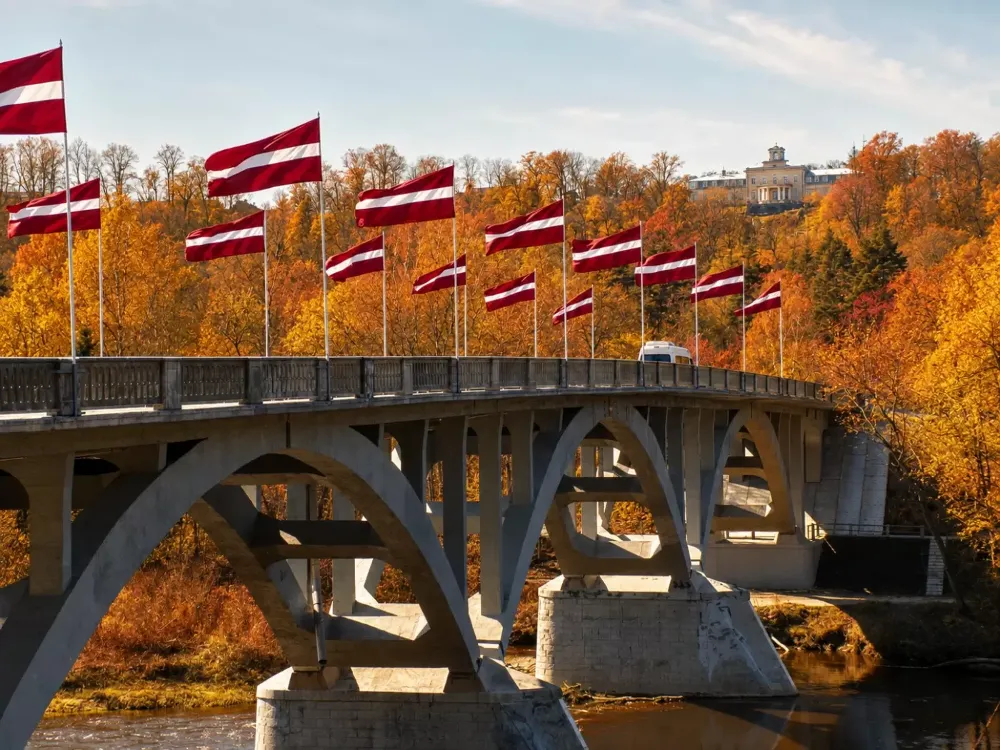
The bridge links the town of Sigulda with the Turaida and Krimulda area, providing both traffic and access to popular tourist sites. It was built in the mid-20th century and is an important transport structure, as it lies on a major road through the Gauja valley.

Structurally it is a reinforced-concrete bridge with several spans, which ensures stability and durability. The bridge is designed for both cars and pedestrians.

Read more >
The Gauja Bridge in Sigulda with Latvian flags in an autumn landscape

Sigulda Cable Car

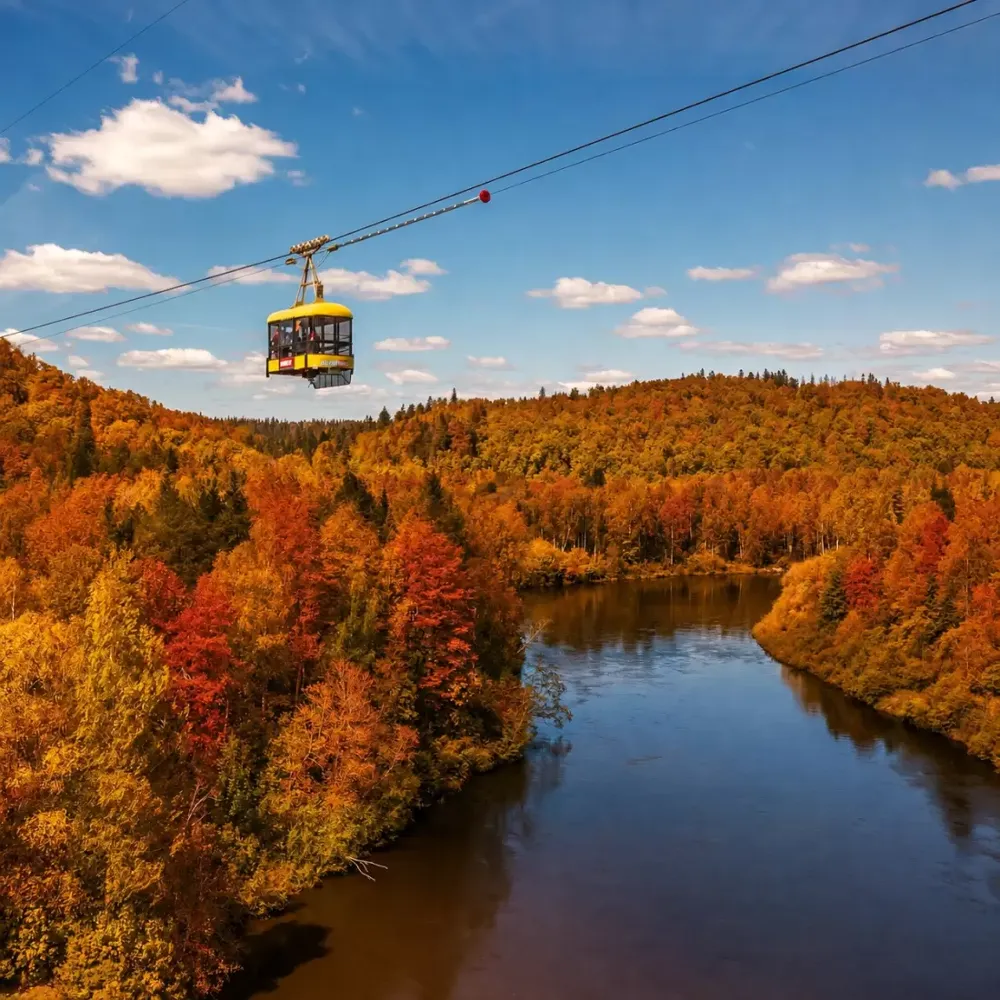
The Sigulda cable car is one of the few aerial cableways in the Baltics. It links Sigulda with the Krimulda side, crossing the Gauja valley high above the river. The ride opens up a wide view of the Gauja valley, which takes on especially rich colours in golden autumn.

The cable car has become one of Sigulda's most recognisable sights and a favourite stop for visitors, combining convenient transport with a unique vantage point over the surrounding nature.

Read more >
The Sigulda cable car over the Gauja valley in golden autumn colours