Construction and a unique structure
The idea of building the bridge arose in the early 20th century, but actual work on the project began in 1928. The superstructure was designed by Professor Kārlis Gailis, while the piers and foundations were designed by engineer K. Tomels.
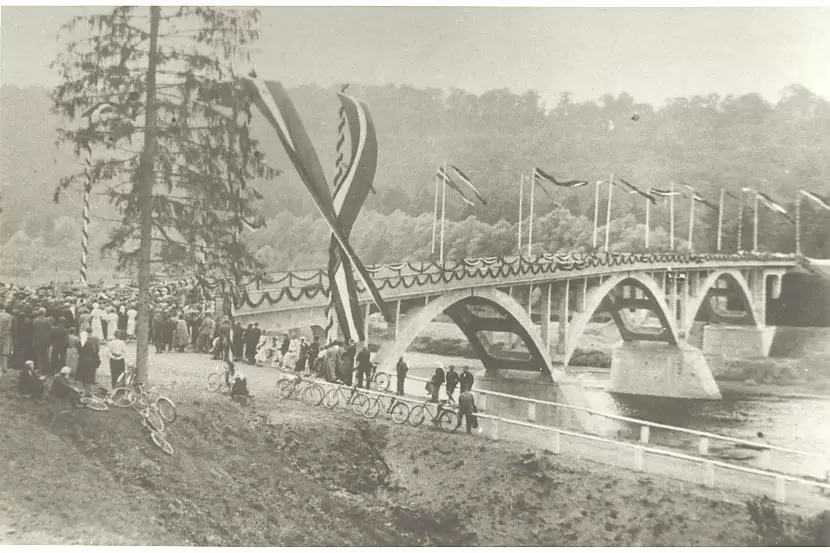
The bridge was ceremonially opened on 23 July 1937.
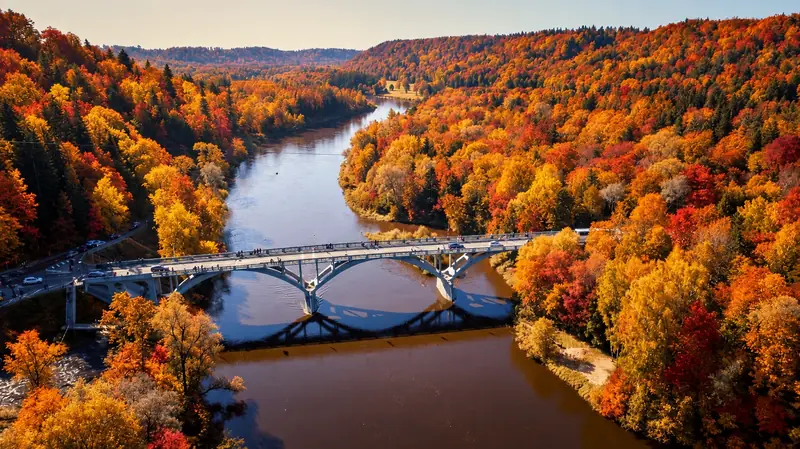
It is built as a three-hinged monolithic reinforced-concrete arch structure: the outer arches are 36 metres long and the central arch spans 37 metres, connecting to frame viaducts on each bank.
The total length of the bridge is 153 metres, and it rises 16.5 metres above the water level of the Gauja. 463 wooden piles were driven into its foundations. It is the only bridge of this technical design in all of Latvia.
Retreating Soviet troops blew up the bridge in the summer of 1941. For the next nine years a ferry carried traffic across the Gauja, until the bridge was rebuilt in 1950 using the surviving parts of the structure.