Gutmanis Cave

The largest cave in the Baltics, a sacred place and a healer

Gutmanis Cave (Gūtmaņala) is one of the most remarkable natural and cultural-historical sites in Latvia, located in Sigulda within the Gauja National Park. It is the largest cave in the Baltics and one of the oldest tourist attractions in the country: 18.8 metres deep, 12 metres wide and up to 10 metres high.

The cave was formed over roughly 10,000 years by water erosion, but its present shape developed over the last 2,000 years. The first written records of Gutmanis Cave appear in German sources as early as 1774, and the first article in Latvian was published in 1869.

The name comes from the German "gut Mann" (good man), the legendary healer who, according to the tale, lived in the cave and healed visitors with the water of its spring. The spring, which still flows from the cave, was once considered sacred: as late as the early 19th century people secretly brought offerings to the gods here.
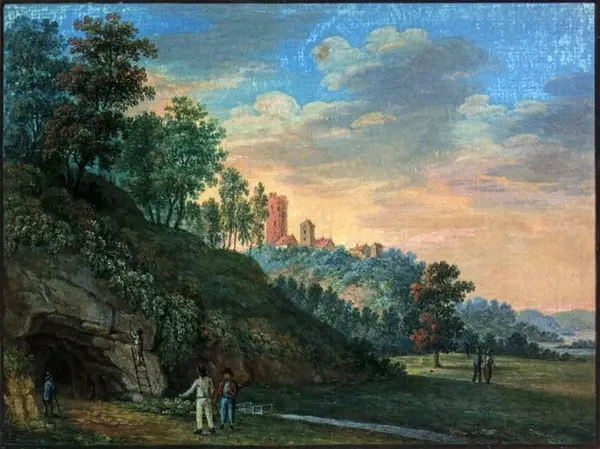

Historical painting of Gutmanis Cave and the Gauja valley landscape

The ancient inscriptions of Gutmanis Cave

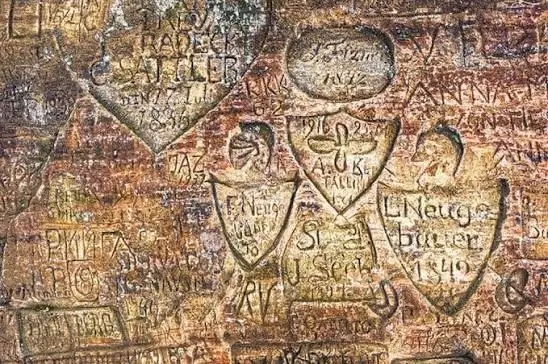
The cave walls preserve ancient inscriptions and carvings, the oldest of which date back to the 17th century. They belonged to travellers, manor lords and barons who wished to leave their names at this popular attraction.

Craftsmen who lived near the cave carved visitors' names, coats of arms and dates directly into the rock for a fee, using special tools. This created a unique "guest book" in stone that has survived to this day: among the inscriptions is a record from 1677 belonging to Anna Magdalena von Tiesenhausen.

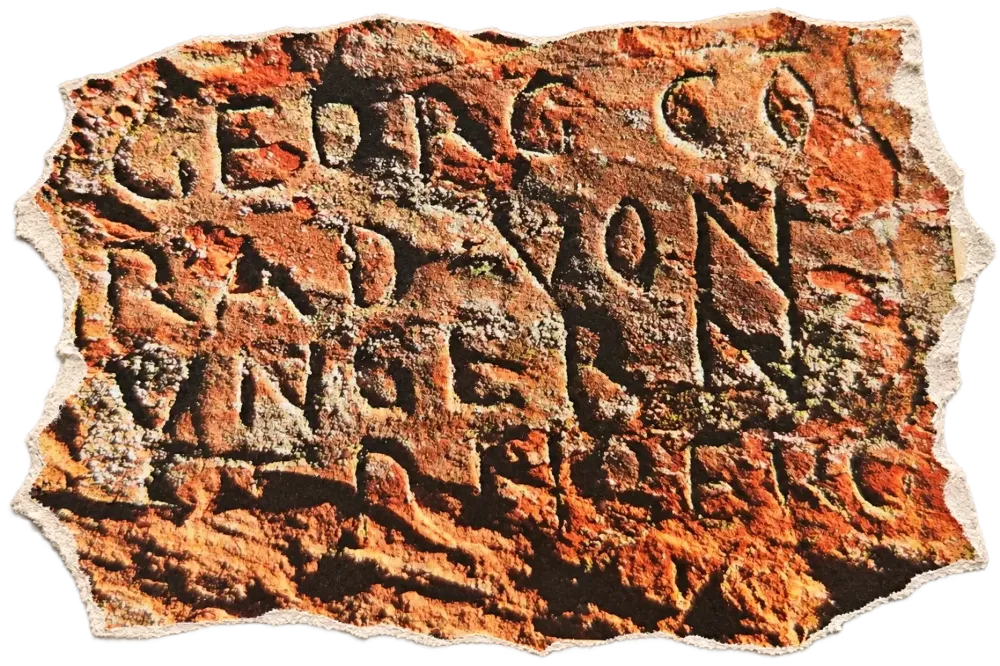
The oldest inscription! Carved in 1668, it belongs to Georg Konrad von Ungern-Sternberg. You can also find this inscription on the Gutmanis Cave inside the Autumn Globe!

Ancient inscriptions and coats of arms carved into the sandstone wall of Gutmanis Cave
A 17th-century inscription with the name Georg carved into the wall of Gutmanis Cave